Community Clothing UK Basics Review: 7 Fit, Fabric, and Return Checks
Community Clothing looks simple at first: shorts, tops, socks, denim, knitwear, and other everyday basics. The buying decision is not simple, though. If you are used to fast-fashion returns, heavy discounts, synthetic stretch, or trend-led fits, a made-in-UK basics brand asks a different question: will you actually wear this piece enough for the fabric, fit, price, and return terms to make sense?
This Community Clothing UK basics review is based on official brand pages, the official Shopify product endpoint, and policy pages rather than first-hand wear testing. For how we separate source-led research from hands-on testing, read our editorial policy and about page. Some retailer links may be affiliate links, but our notes stay focused on buyer fit, fabric behaviour, care friction, returns, price value, and wardrobe use.
The short version: Community Clothing is worth checking if you want practical casualwear with a UK manufacturing story and natural-fibre positioning. It is less suitable if you need free exchanges, very stretchy athleisure fits, or a guaranteed no-risk try-on process.
1. What Community Clothing Is Actually Selling
Community Clothing describes its model as affordable, well-made clothing produced in the UK. On its official About Community Clothing page, the brand says every garment carrying its name is made in the UK and that it works with partner factories across textile regions including Lancashire, Yorkshire, the East Midlands, Scotland, and South Wales.
That matters because the brand is not primarily selling novelty fashion. It is selling a slower wardrobe idea: seasonless basics, local manufacturing, natural materials, and repeat wear. The strongest fit is a shopper who wants casualwear that can sit beside denim, sweatshirts, striped tees, socks, and simple summer layers without looking like a one-season purchase.
The risk is expectation mismatch. If you are shopping for high-stretch gym shorts, ultra-light synthetic travel wear, or a trend piece for one event, Community Clothing may feel too plain. The brand’s value case depends on whether you actually want basics that look ordinary enough to wear often.
2. Jersey Shorts: Check Rise, Length, and Casual Use First
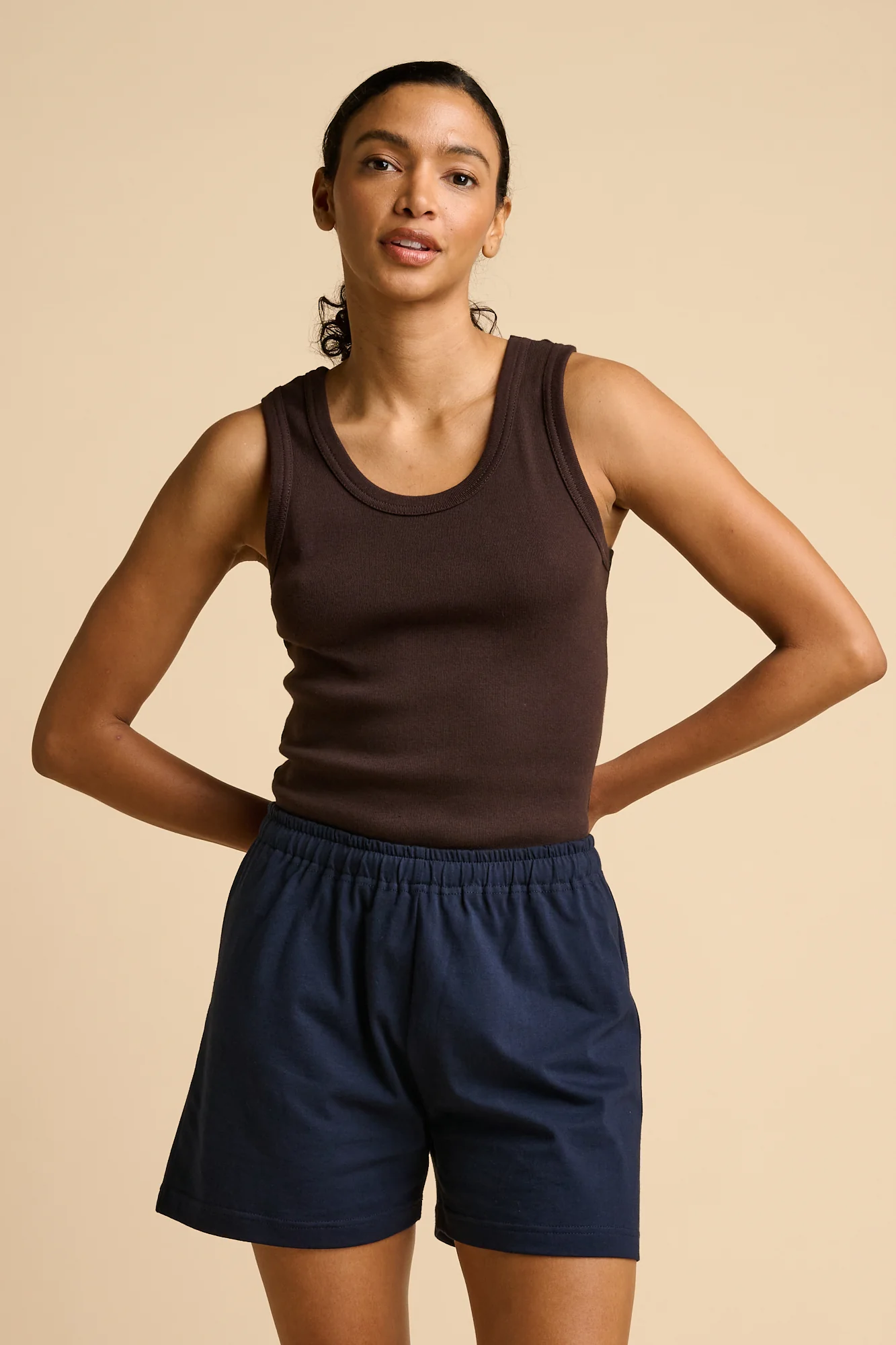
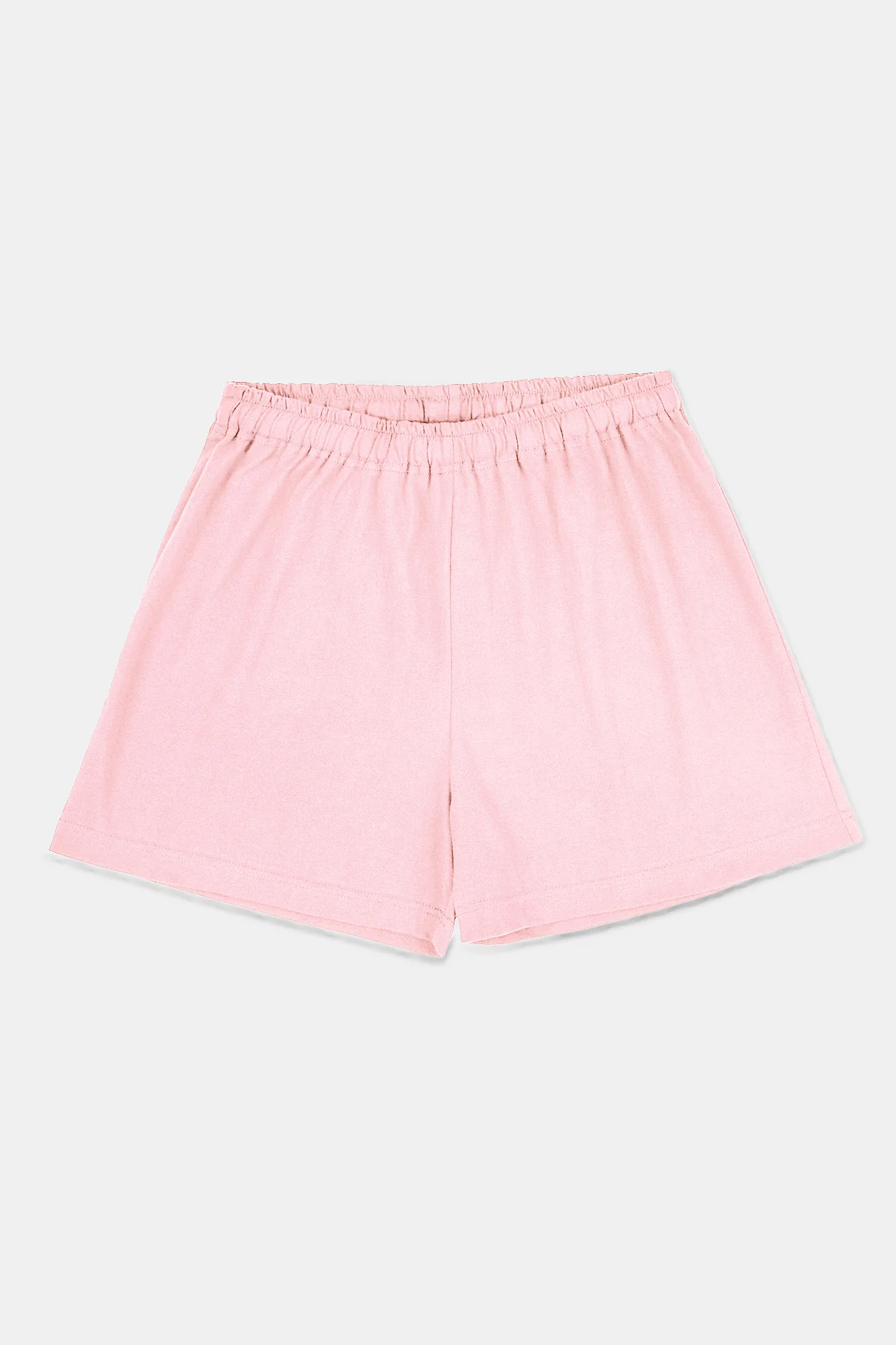
The jersey shorts are the most obvious entry point for warm-weather basics. The official product imagery supplied for this article includes women’s jersey shorts in pink and navy, plus men’s navy jersey shorts. That gives the article a useful buying lens: these are not tailored city shorts, and they are not technical hiking shorts. They read as soft casual shorts for lounging, errands, beach-adjacent days, and low-key summer wear.
Before buying, check three fit details on the current product page: waistband style, inseam length, and how the leg opening sits on the model. Jersey can feel forgiving, but it can also reveal too much if the fabric is thin, clingy, or cut close. Without first-hand testing, the safest editorial position is to treat these as casual comfort shorts rather than smart shorts.
For wardrobe use, navy is the lower-risk colour. It works with white tees, grey sweatshirts, denim overshirts, canvas trainers, and most holiday packing lists. Pink is more expressive and better if you already wear warm neutrals, navy, cream, or washed denim. If you only buy one pair and want repeat wear, start with the darker option.
3. Patsy Polka Dot Shorts: More Character, Less Universal

The Patsy polka dot shorts image gives a different read from the plain jersey options. The pattern adds personality, but it also narrows styling range. This is where Community Clothing’s basics story meets a more visible piece: still casual, still wearable, but less invisible in an outfit.
Choose these if your summer wardrobe already includes plain tops, simple sandals, tucked tees, or sleeveless shirts. Skip them if you need a neutral bottom that can disappear into five outfits a week. Patterned shorts can work hard on holidays, but they are less flexible for repeated office-adjacent or school-run wear.
The practical check is not whether the print is attractive. It is whether the print solves a real wardrobe job. If you mostly wear navy, black, white, grey, and denim, polka dot shorts can add useful contrast. If your wardrobe already has a lot of prints, the plain jersey shorts may be the cleaner buy.
4. Sleeveless Tops: Layering Value Depends on Armhole and Fabric
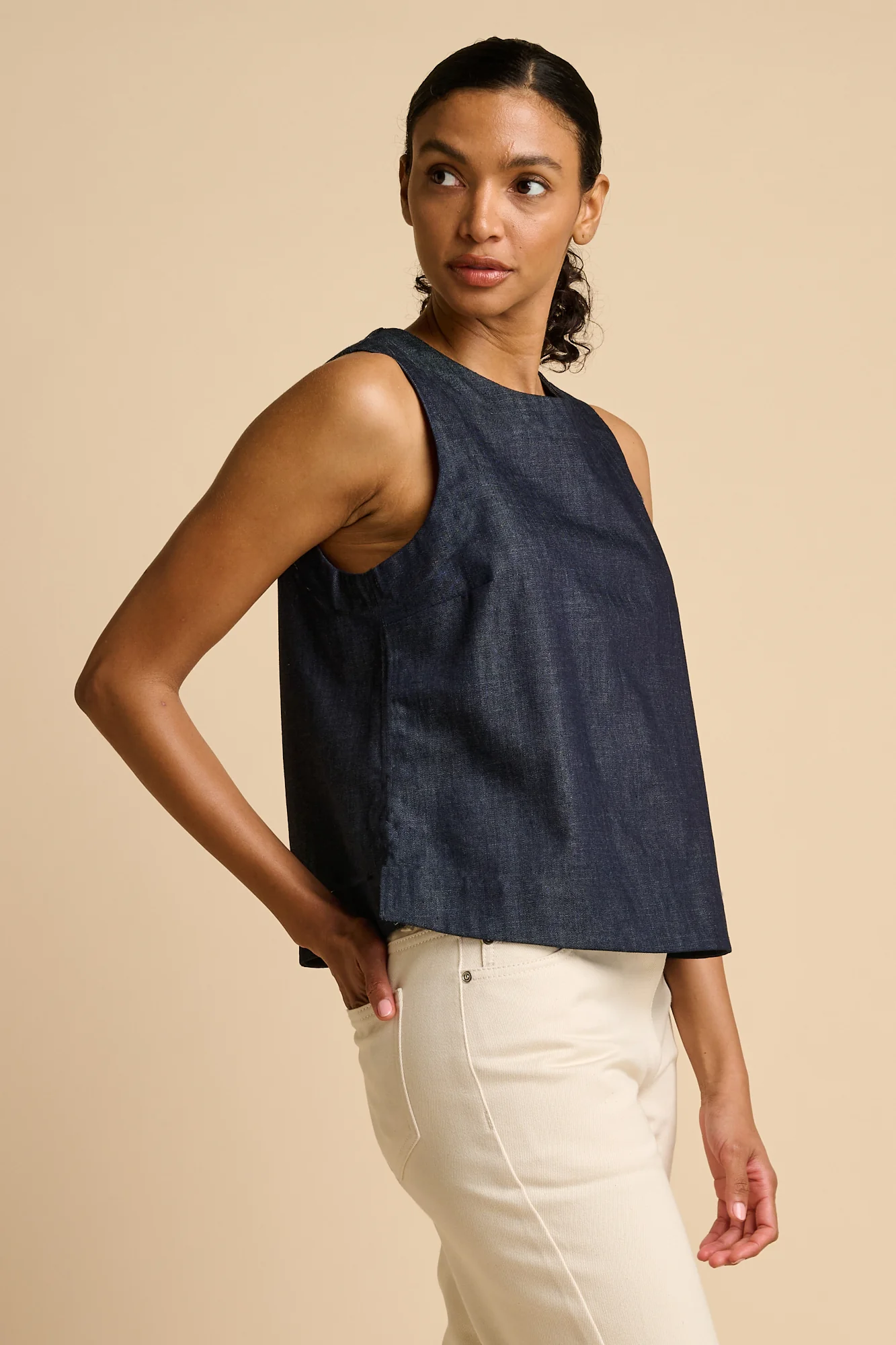
The Sybil sleeveless top in indigo denim is the strongest piece here for people who want more structure than a vest but less formality than a shirt. The official homepage surfaced the Sybil Sleeveless Top in Indigo Denim at the time of source review, but live price and availability should always be checked on the current product page before ordering.
Sleeveless tops are fit-sensitive. The key checks are shoulder width, armhole depth, bust room, and whether the hem works tucked or untucked. A top can look clean from the front and still fail if the armhole exposes underwear or the neckline sits wrong under a cardigan. If the product page has model height and size notes, use them. If not, compare the garment shape against a sleeveless top you already own.
The denim angle makes the piece more wardrobe-useful than a flimsy summer top. It can work with cream trousers, navy shorts, wide-leg denim, skirts, or under a chore jacket. The skip case is equally clear: if you want stretch, drape, or a soft vest feel, a structured denim sleeveless top may feel too fixed.
5. Fabric and Material Behaviour: Natural Fibres Are the Point
Community Clothing’s materials page says the brand uses almost exclusively wool, linen, and cotton, and frames fabric choice around wearability, environmental impact, and long life. That is useful source evidence, but it does not remove the need to check each product’s exact composition.
For jersey shorts, cotton-heavy fabric usually means breathable comfort, easier everyday washing, and a softer casual hand. It may not behave like synthetic activewear: do not expect the same quick-dry performance, compression, or bounce-back stretch unless the product composition says so. For denim or woven sleeveless tops, expect more structure and less give.
Care is part of the value equation. Natural-fibre basics can improve with wear, but they can also shrink, fade, or lose shape if washed hot, tumble-dried aggressively, or stored badly. Before buying, check the garment care label on the product page and decide whether you are willing to follow it. A cheaper garment you can mistreat may suit some shoppers better than a better-made garment that asks for calmer laundry habits.
6. Made-in-UK Value: Worth It Only If You Use the Clothes Often
The brand’s value proposition is not “lowest possible price.” It is UK-made basics with a transparent manufacturing story. Community Clothing’s official site says it works with UK factories and positions its products as seasonless basics rather than constant newness. That can be a strong reason to buy, especially if you care about domestic manufacturing and want to move away from disposable clothing.
But the value still has to survive normal wardrobe maths. Ask how many times you will wear the item in the first year. Jersey shorts worn weekly through summer can justify a higher price than novelty shorts worn twice. A sleeveless denim top that layers under jackets and works with multiple bottoms has a better cost-per-wear case than a piece that only works with one outfit.
For context, external fashion coverage has also treated made-in-Britain clothing as part of a wider shift toward traceability and local production, including recent reporting from Marie Claire UK. That does not prove any single garment is right for you. It does explain why shoppers increasingly treat supply chain and provenance as part of the buying decision.
7. Delivery and Return Friction: Read This Before You Order
The return policy is the biggest practical friction point. Community Clothing’s returns policy says it does not offer exchanges. Returns must be requested through the portal within 14 days of receiving the order, and once approved, you have another 14 days to send the product back. Customers are responsible for ordinary return postage costs.
That does not make the policy bad; it makes sizing discipline more important. If you are between sizes, buying multiple sizes to test at home may be less appealing than with a retailer offering free returns or simple exchanges. For a brand where fit and fabric feel matter, that is a real buyer consideration.
Shipping also affects basket planning. The official shipping page lists free shipping over £100, standard UK delivery options around £3.95-£3.96, and express shipping at £7.95 at the time of source review. Fees and thresholds can change, so recheck before checkout. If you are ordering one lower-priced basic, delivery and possible return postage may materially change the total cost.
Who Should Buy Community Clothing Basics?
Community Clothing makes the most sense for shoppers who want casual, repeat-wear basics and care about UK manufacturing. Start with the plain jersey shorts if you need low-effort summer wear. Consider the Sybil sleeveless top if you want a more structured piece that can layer across seasons. Look at the Patsy polka dot shorts if your wardrobe needs pattern rather than another neutral.
It is also a good fit if you are willing to slow down before checkout: measure a similar garment, compare product photos carefully, read the material composition, and accept that the returns process is not a frictionless try-on loop.
Who Should Skip?
Skip Community Clothing, or at least pause before ordering, if you need free exchanges, heavy stretch, technical sports performance, or a highly trend-led silhouette. Also skip if you are not willing to check garment care. The brand’s pitch works better for people who repeat-wear basics than for people who want disposable variety.
If you are comparing another apparel brand with a more outdoor or travel-led angle, our Passenger Clothing UK shorts and outdoor layers review is the closest internal comparison. You can also browse the brands archive as we add more fit, fabric, returns, and wardrobe-use reviews.
Buying Checklist
- Check the exact product composition, not just the brand’s general material position.
- Compare garment shape against something you already own.
- Decide whether the colour or print will work in at least three outfits.
- Read the returns policy before using the basket as a fitting room.
- Recheck shipping thresholds and delivery method at checkout.
- Avoid buying a patterned piece if what you need is a neutral workhorse.
- Treat made-in-UK provenance as a value factor, not a substitute for fit.
Title Candidates
- Community Clothing UK Basics Review: 7 Fit, Fabric, and Return Checks
- Are Community Clothing Jersey Shorts Worth It for Everyday Wear?
- Community Clothing Sleeveless Tops and Shorts: What to Check First
- Made-in-UK Casualwear Without Guesswork: Community Clothing Review
- Community Clothing Review: Who Should Buy the Basics, and Who Should Skip?
FAQ
Is Community Clothing made in the UK?
Community Clothing states on its official about page that every garment carrying its name is made in the UK. It also says it works with partner factories across several UK textile regions. Shoppers should still check individual product pages for specific composition and product details.
Are Community Clothing jersey shorts smart enough for work?
Treat them as casual shorts unless the product page and your workplace dress code suggest otherwise. Jersey generally reads softer and more relaxed than tailored cotton or linen shorts, so they are better for weekends, holidays, lounging, and informal summer outfits.
Does Community Clothing offer exchanges?
The official returns policy says Community Clothing does not offer exchanges. Returns must be requested through the returns portal within the stated window, and customers are responsible for ordinary return postage costs unless the item is faulty.
Are the basics good value?
They can be good value if you want UK-made clothing and will wear the garments often. The value case is weaker if you need a one-off trend item, want no-cost fit experiments, or prefer synthetic stretch and technical performance.
What should I check before buying a sleeveless top?
Check shoulder width, armhole depth, bust room, fabric structure, and whether the hem works with your usual trousers or shorts. Sleeveless tops are unforgiving when the armhole or neckline is wrong, so compare photos with a top you already wear comfortably.
Sources
- Community Clothing official homepage
- Community Clothing about page
- Community Clothing materials page
- Community Clothing shipping page
- Community Clothing returns policy
- Community Clothing official Shopify endpoint
- Marie Claire UK on made-in-Britain fashion
Editorial information: Read our affiliate disclosure.